
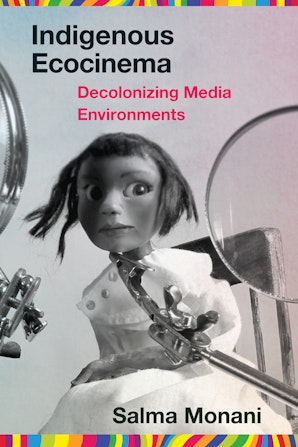

Indigenous Ecocinema
Decolonizing Media Environments
Introducing the concepts of d-ecocinema and d-ecocinema criticism, Monani expands the purview of ecocinema studies and not only brings attention to a thriving Indigenous cinema archive but also argues for a methodological approach that ushers Indigenous intellectual voices front and center in how we theorize this archive. Its case-study focus on Canada, particularly the work emanating from the imagineNATIVE Film + Media Arts Festival in Toronto—a nationally and internationally recognized hub in Indigenous cinema networks—provides insights into pan-Indigenous and Nation-specific contexts of Indigenous ecocinema.
This absorbing text is the first book-length exploration foregrounding the environmental dimensions of cinema made by Indigenous peoples, including a particularly fascinating discussion on how Indigenous cinema’s ecological entanglements are a crucial and complementary aspect of its agenda of decolonialism.
List of Tables
Preface
Land Acknowledgments
A Glossary Clarifying the Use of Terms
Introducing D-Ecocinema
Introduction
1. D-ecocinema Criticism: Reclaiming Indigenous Eco-Agency
2. (Re)rooting Indigenous Place: The ImagineNATIVE Film and Media Festival
3. (Re)growing The World: imagineNATIVE as In-Person and Remote Festival
4. Timely Interventions: Indigenous Cinema Time(s)
5. Snipping and Glitching Colonial Time: The Films of Terril Calder and Caroline Monnet
6. Indigenous Affects: Cinematic Humor’s Earthly Embodiments
7. Laughter to Breathe: The Films of Zoe Hopkins and Shelley Niro
Epilogue
Acknowledgments
Bibliography
Primary Filmography
Artist websites
— Amy Hamilton, author of Peregrinations: Walking in American Literature
“A much-needed addition to the fast-growing fields of Indigenous media and ecocinema studies. Well-written, with both substantive theoretical heft and, at the same time, a warm and inviting tone and a very readable style, the arguments Monani makes around issues of place, time, and affect comprise a compelling case for the centrality of Indigenous cinematic mediations of ecological consciousness.”
—Joanna Hearne, author of Native Recognition: Indigenous Cinema and the Western and Smoke Signals: Native Cinema Rising